The Head of the Monster: Why AI Still Needs You
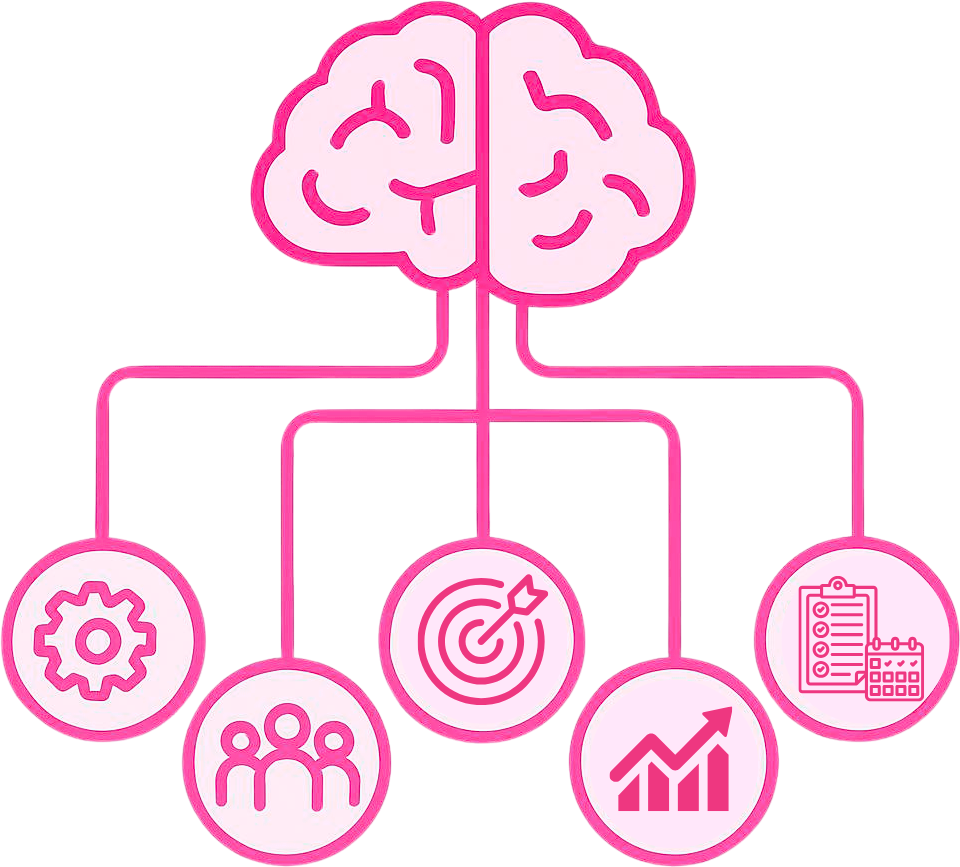
Let’s start with a mental image.
Picture your business as a giant, slightly chaotic, multi-armed monster.
Each arm is doing something useful.
One is sending emails.
Another is analyzing data.
Another is drafting content.
Another is managing tasks.
Efficient?
Absolutely.
But here’s the question we don’t ask enough:
Who’s the head of the monster?
Because without one…those arms aren’t coordinated. They’re just moving.
And right now, a lot of teams are quietly hoping AI can be both…and it can’t.
AI Is the Arms Not the Head
AI is incredible at executing certain tasks. It’s fast, scalable, and increasingly intuitive. It can summarize, draft, automate, and even recommend. But it doesn’t connect in the way humans do by understanding nuances across competing priorities, weighing emotional context in decision-making, seeing how certain decisions can ripple across a business, or advocating for those not being heard.
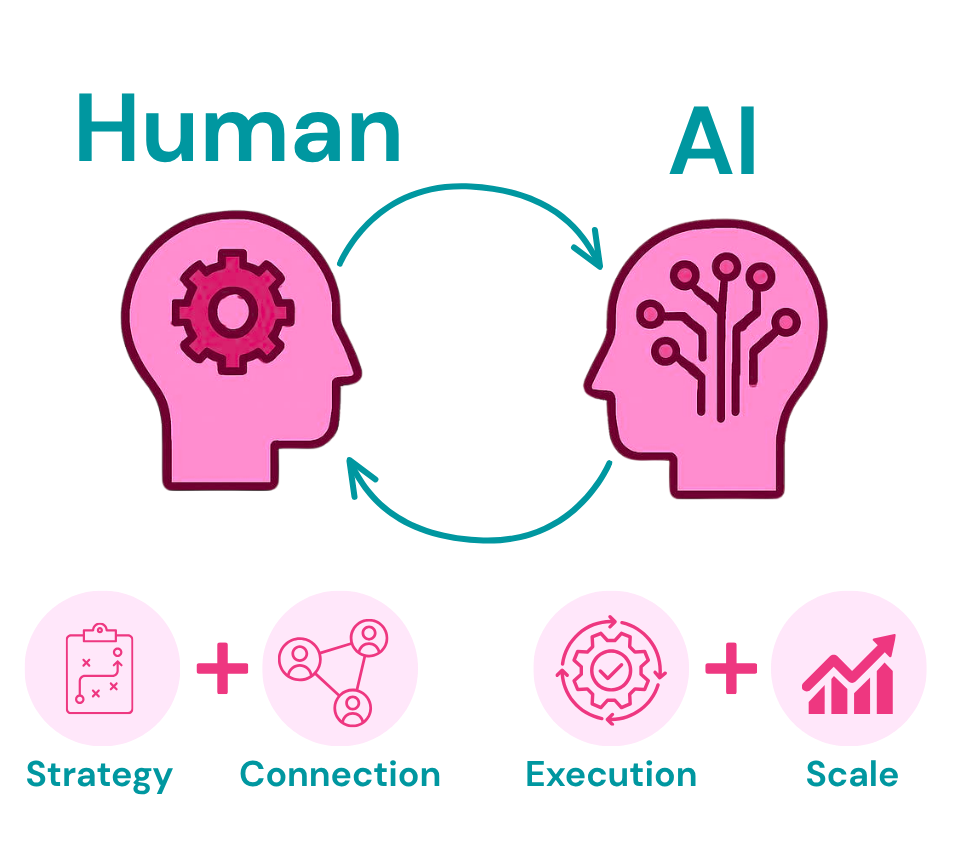
AI can perform tasks. Humans create meaning between them.
That distinction matters more than ever.
Because when businesses start treating AI like the head of the monster, things don’t get more efficient-they get fragmented.
The Illusion of “Connected” Systems
Here’s where we see teams get stuck.
They invest in project management tools, documentation systems, CRMs, and multiple AI assistants.
Individually? These tools are powerful.
Together? They should create a seamless operational engine.
But instead, teams end up asking why does nothing feel aligned, why are we still repeating work, and why does everything feel harder than it should?
Because tools don’t create alignment. People do.
Many of the biggest operational challenges like misalignment and inefficiencies are still rooted in how humans work together, not just the tools they use .
And that’s the piece most businesses overlook.
Someone Still Has to Connect the Dots
Let’s go back to the monster.
Each arm might be strong on its own. But without a head, tentacles can’t prioritize, communicate, or adapt to new information in a meaningful way.
That’s where human leadership comes in. Not just at the executive level, but across your team. Because connecting systems isn’t just about integrations. It’s about context, judgment, communication, and intentional decision-making.
Someone has to decide what matters, what comes next, and why.
AI can support those decisions, but it can’t own them.
The Real Risk Isn’t AI Replacing People
Let’s clear something up: the risk isn’t that AI replaces your team. The risk is that your team stops thinking like the head of the monster.
When that happens decisions are deferred to tools, critical thinking is outsourced, processes become rigid rather than adaptive, and teams lose confidence in their own judgment. Suddenly, you have a VERY efficient system…that isn’t actually working.
So What Should You Do Instead?
This isn’t about resisting AI. It’s about using it well.
At LGN Collaborations, we believe the goal isn’t to remove humans from your operations. It’s to build systems that amplify how your team thinks, collaborates, and leads.
Here’s what that looks like in practice:
1. Define What Humans Own
Be clear about where human decision-making is required.
This often includes tasks like prioritization, strategy, cross-functional alignment, and final approvals. If everything is “automated,” nothing is truly owned.
2. Assign AI to Specific Roles
Instead of using AI for “everything,” use it for specific things: drafting first versions, summarizing information or meeting notes, automating repetitive workflows, and supporting data analysis. Think of AI as a specialist, not a general manager.
3. Build Connection Points
This is where most systems break.
You need intentional moments where information is reviewed, interpreted, and connected across teams. Without these touchpoints, tools operate in silos… even if they’re technically integrated.
4. Train Your Team to Think, Not Just Execute
AI can accelerate output, but your team should still be trained in skills such as asking better questions, challenging assumptions, and understanding the “why” behind decisions. The goal isn’t faster work. It’s smarter work.
The Future Isn’t Human vs. AI
It’s human with AI.
The businesses that thrive won’t be the ones with the most tools.
They’ll be the ones where people feel confident leading systems, teams understand how everything connects, and where operations are designed around humans-not the other way around.
Which, if you think about it, isn’t new. It’s just clearer now.
The Bottom Line
AI can extend your reach, but it can’t replace your perspective. It can move the arms, but it can’t be the head.
And your business?
It still needs someone thinking, connecting, and leading the whole thing forward.
If your systems feel busy but not aligned, that’s not a tooling problem. It’s a connection problem.
And that’s exactly where LGN Collab comes in.